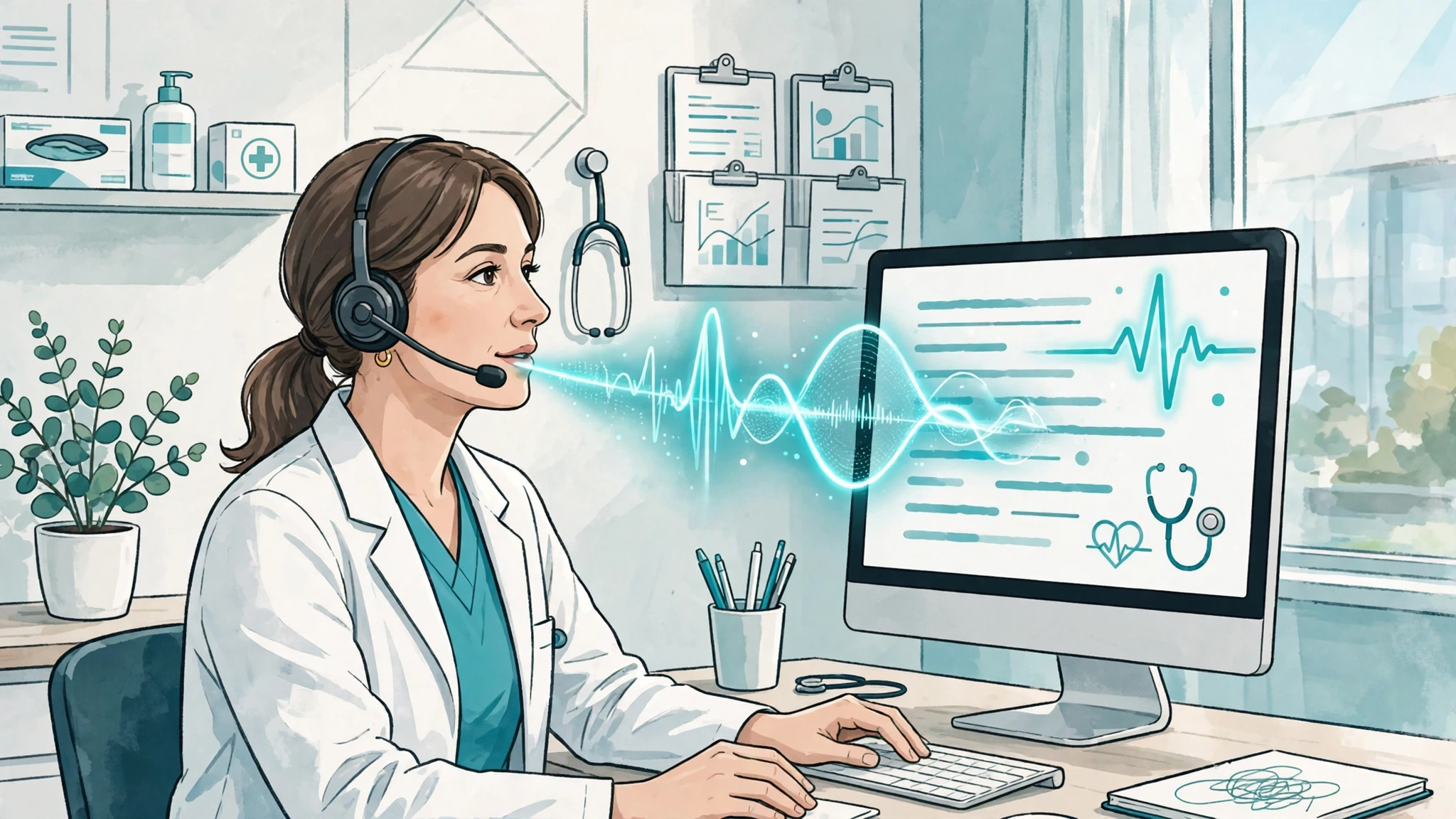
Medical dictation software turns a clinician’s spoken words into written clinical documentation. It exists for one reason: doctors and nurses spend a large part of their day typing notes, and every hour spent on documentation is an hour not spent with patients. The right software gives some of that time back. The wrong software adds a new layer of editing frustration.
This guide explains the category in plain language for clinic managers, practice owners and clinicians comparing options. It covers the two different technologies sold under this name, the features that actually matter, the compliance questions you must ask, and a simple checklist to use before you buy. It is a software guide only — it does not offer medical advice.
The Two Types of Medical Dictation Software
Traditional Dictation (Speech-to-Text)
Traditional medical dictation software listens while a clinician speaks and converts speech directly into text inside the electronic health record (EHR) or a document. The clinician controls the note word by word, including punctuation and formatting commands. Microsoft’s Dragon Medical One is the best-known example of this type. It suits clinicians who like to dictate finished notes themselves and want a deep medical vocabulary behind the recognition.
Ambient AI Scribes
Ambient AI scribes work differently. With patient consent, the software listens to the conversation during a visit and drafts a structured clinical note afterwards, which the clinician reviews and approves. Products such as DAX Copilot, Suki and DeepScribe follow this model, while newer services like Freed focus on simple, fast note generation for smaller practices. Ambient tools reduce typing further, but they require careful review of every draft and clear consent and privacy processes.
Understanding which type you want is the first decision, because the products, prices and workflows differ significantly.
Features That Actually Matter
Medical vocabulary and accuracy come first: general-purpose voice typing struggles with drug names, procedures and abbreviations, while purpose-built medical dictation software is trained on clinical language. Second, EHR integration — the tool should place notes where your team already works, not create a copy-and-paste step. Third, specialty support: a cardiology practice and a mental-health practice dictate very differently.
Fourth, editing workflow — how fast can a clinician correct and sign a note? Fifth, availability across the devices your team uses, including mobile. Finally, training and support matter more than buyers expect, because adoption by busy clinicians decides whether the software is used at all. The technology behind tools like these builds on wider advances in AI and automation in software development, which is why the category is improving so quickly.
Compliance Questions You Must Ask
Any tool that handles patient information must be assessed for privacy and security before purchase. In the United States, ask whether the vendor will sign a Business Associate Agreement (BAA) and how the product supports your HIPAA obligations; the U.S. Department of Health and Human Services explains those obligations in its HIPAA guidance. Ask where audio and transcripts are stored, how long recordings are retained, whether your data is used to train the vendor’s models, and what happens to your data if you cancel. For ambient scribes, also confirm how patient consent is captured. If a vendor cannot answer these questions clearly, that is your answer.
How to Choose: A Simple Checklist
- Decide your type: direct dictation, ambient scribe, or a mix for different clinicians.
- List your non-negotiables: EHR system, specialties, languages, mobile use.
- Shortlist two or three vendors that publish clear information about security and sign a BAA.
- Run a short pilot with a few willing clinicians on real clinic days.
- Measure what matters: time to close notes, editing effort and clinician satisfaction.
- Check the full cost, including per-clinician licences, setup and training — and confirm current pricing on the vendor’s own site, because plans change.
- Roll out gradually with training, and keep a feedback channel open in the first month.
Common Mistakes When Buying
The most common mistake is buying for the demo instead of the daily workflow: a tool that impresses in a sales call may slow clinicians down in a busy clinic. The second mistake is skipping the pilot and signing a long contract first. The third is ignoring the review burden of ambient AI — drafts still need a clinician’s eyes before they become part of the record. Finally, some practices forget the human side: involve the clinicians who will use the software in the decision, or expect resistance later.
Frequently Asked Questions
What is medical dictation software?
Medical dictation software converts a clinician’s speech into written clinical documentation. Traditional products transcribe dictation directly into the record, while newer ambient AI scribes listen to the visit conversation and draft a structured note for the clinician to review and approve.
Is medical dictation software HIPAA compliant?
The software itself is only part of compliance. A product can support HIPAA-covered work when the vendor signs a Business Associate Agreement, applies appropriate security safeguards and is used within a practice’s own compliance programme. Always verify the vendor’s current commitments directly before using any tool with patient information.
What is the difference between dictation software and an AI medical scribe?
Dictation software transcribes what the clinician says, word for word, under the clinician’s control. An AI medical scribe listens to the whole encounter and generates a draft note automatically. Scribes save more typing but require consent processes and careful review of every generated note.
How much does medical dictation software cost?
Pricing varies widely by product type, practice size and contract, and it changes often. Rather than relying on figures in articles, request current per-clinician pricing from two or three shortlisted vendors and compare the total cost, including setup and training.
Final Verdict
Medical dictation software is worth buying when it measurably reduces documentation time without creating review headaches or compliance risk. Decide whether you need direct dictation or an ambient scribe, test finalists in a real pilot, and let your clinicians’ daily experience make the final call.