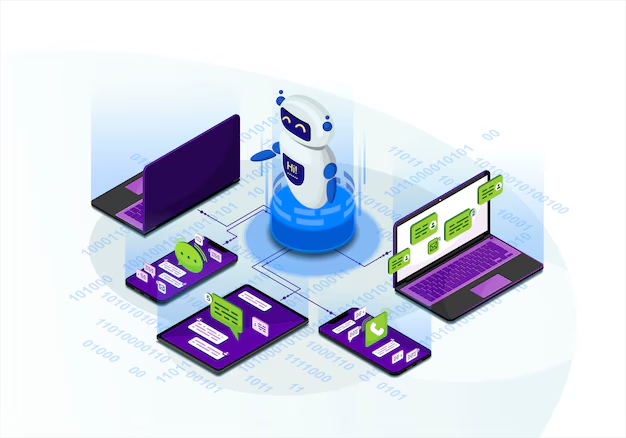
AI and Automation: Revolutionizing Software Development
Software development has never fallen behind in technological innovation and has continued to evolve based on the requirements of the dynamic and swiftly changing digital world. As early procedural languages, more recent object-oriented programming languages, and agile development methodologies have been described as long-term searches in the pursuit of efficient, scalable and robust programming. Within the last few years, the advent of Artificial Intelligence (AI) and automation has marked a new beginning in creating software, which eventually transformed how software is conceived, designed, tested, deployed, and maintained. The technologies are not only incremental tools, but they are transforming the nature of software engineering to assist developers in achieving a new stage of productivity and precision and innovation.
The following blog is going to discuss the multi-faceted nature of the problem of AI and automation in software development, with the way that these technologies decrease the efficiency of coding systems and enhance the quality assurance, project management optimization, and development of innovative software solutions. We shall also examine the challenges, ethical considerations, and opportunities of the development of AI-motivated software development. The problem of the integration of AI and automation allows us to better understand the future of technology and how human developers will be integrated into the new ecosystem.
The Rise of AIs in Software Development
Artificial Intelligence can not be defined as belonging to only one machine, and it may be said to be a process of simulating human intelligence through a machine, but it has been permeating the process of developing software. In this connection, AI is trained with the help of machine learning, natural language processing, and predictive analytics, with the help of which the repetitive functions are automated, the trends are recognized in the code, and the probable errors of programmers are predicted. The last decade has also witnessed the use of AI in the software development lifecycle change not only as a partial experimental work, but also in the general industry, with AI being widely used in most aspects of the industry to a great extent, both in terms of productivity and quality.
AI-Driven Code Generation
One of the most radical advances of AI use cases in software development is AI-assisted code generation. GitHub Copilot, OpenAI Codex, and TabNine use large language models to help developers write more effective code. They are applied to large amounts of code in open-source copies and documentation to provide smart suggestions about the code, auto-completions and even entire structures of functions. The benefits are clear:
- Using More Productive Software: The developers have fewer boilerplate and more significant logic and problem-solving. This is especially feasible in large-scale projects in which the redundancy of activities can consume a huge portion of the development time.
- Fewer Mistakes: AI can detect syntax and semantic errors earlier in the development cycle and thus save time on fixing them and reduce the possibility of developing a bug that is not only severe but also drastically impacts the whole production process.
- Learning Method: Junior programmers may use AI-based coding helpers to study the best practices and improve their writing with live recommendations and explanations.
Along with traditional programming languages, AI-assisted code generation is becoming more popular in low-code and no-code platforms, where non-technical users can build, with little or no code knowledge, applications that are operational and work. This means faster prototyping for businesses and the possibility of putting business analysts in software development schools directly, and thus reducing their dependence on special developers.
Automatic Quality Control and Testing
As one of the sensitive and at the same time, traditionally time-consuming elements of the software development process, quality assurance (QA) is a sensitive subject. AI and automation have revolutionized this sector by being able to conduct automated testing that is faster, reliable and can scale. The AI technologies can perform several testing functions with minimal human supervision:
- Unit and Integration Testing: These tools involve the automatic creation of test cases using code logic with the aid of AI and include edge cases that a human tester might have overlooked. This enables the application to behave in different scenarios.
- Regression Testing: Regression tests are chosen and implemented in such a manner that they rely on machine learning to decide what parts of a codebase change most often with change, and that is why it is the best at making decisions.
- Bug Prediction: Predictive Models are applied to predict bugs depending upon past bug reports and pattern code, which is then applied to take proactive measures to avoid the problem spiralling out of control.
- Performance Optimization: AI-based applications are able to model various workloads in order to identify performance bottlenecks, predict potential failure and suggest performance optimization.
Automated QA will reduce the human factor error likelihood, the development path is also shorter; the developers can concentrate on more demanding logic and innovative solutions rather than on testing routine. The number of faster release cycles and software reliability is increased in companies that apply AI-based QA.
Smart Project Management
The software development projects are linked with delays, cost overruns and scope creep. It can be solved through AI and automation, intelligent project management tools that will assist in planning, scheduling, and resource allocation.
- Predictive Analytics: AI models can forecast the schedule of projects and resource consumption, potential risks based on past data. As an illustration, it may be the algorithms which approximate the time period that a specific attribute will take to implement, on the basis of the measurements of the performance of a team and the time that it took in the past to execute specific tasks.
- Task Automation: Automatic tasks, such as progress reporting, backlog prioritization, and status reporting, can be automated, and the project managers can focus on strategy and innovation.
- Enhancement of Teamwork: AI-based solutions have the potential to analyze the team communication and project data, identify bottlenecks, suggest solutions as well and streamline the process. Using AI as an illustration, it can indicate the tasks that tend to be always late or the discrepancy in the amount of work that the members of the team are engaged in.
Addressed to project management, AI will assist organizations to be more efficient, accountable, and have higher hopes of project success; hence, software development will be predictable and less susceptible to costly overruns.
The Lifecycle of Developing Automation
Automation of software development is the implementation of software tools and scripts, and platforms to run routine tasks without human interference. Though AI is the intelligence source, and automation is the execution source, the two transform the software development process. Automation and AI are not exclusive to each other: AI issues are solved, forecasted, and optimized, whereas they are scaled through automation.
Continuous Deployment Continuous Integration (CI/CD)
CI/CD pipes are the main component of the modern DevOps app, and they allow for automatic assembly, testing, and releasing software. AI will enhance such pipelines by doing the following:
- Smart Build Optimization: AI is able to know what modules need to be recreated and this will save on the time spent on unnecessary compilation.
- Automated Testing: AI tests are CI/CD pipeline tests that can deliver timely and accurate feedback, enabling developers to find out issues before they can reach production.
- Anomaly Detection: The deployments are monitored with the help of machine learning models to detect abnormal behavior and prevent the emergence of any potential errors or performance issues without interfering with end users.
AI-powered CI/CD pipes are quicker and provide quality; they also enable continuous innovation, reducing the requirement of human input.
Infrastructure Automation
Modern software application usage can be premised on complex cloud architecture, which can be prone to improper settings and a lack of performance. Infrastructure as Code (IaC) combined with AI may assist in offering developers the automation of infrastructure provisioning, configuration, and administration. Some of the applications in which it can be applied include:
- Predictive Scaling: artificial intelligence scales the cloud resources and predicts the demand to scale optimally as the demand changes.
- Security Automation: An AI-based application will query the infrastructure settings to identify vulnerabilities and, therefore, will automatically rectify or alert the security groups of threats.
- Cost Optimization: A machine algorithm is applied to examine the trend of resource consumption and suggest the most appropriate cost-efficient deployment options without affecting the performance.
AI-powered infrastructure automation can assist organizations to become more reliable and more scalable, as well as save huge sums of money without affecting the security level.
AI in Software Design
Artificial intelligence is transforming software design by providing insight, advice, and optimization, which once belonged to the role of a skilled architect:
- Architecture Recommendation: AI tools suggest software architecture patterns that can be used to improve maintainability and scalability.
- Code Refactoring: Code refactoring models read the current codebase and propose changes to simplify the codebase to reduce the technical debt, and improve its performance.
- User Experience (UX) Optimization: AI can simulate user behavior, process user data, and propose UI/UX improvements and provide developers with the opportunity to develop user-friendly and enjoyable applications.
In the design phase, the developers can come up with a technically sound and user-friendly software that creates long-term value to both the organization as well as to the end users.
Case Studies: AI as a replacement for the actual software development
GitHub Copilot
GitHub Copilot is one of the best examples of AI-based software development. It does generate code snippets, offers function suggestions and can even generate entire modules as an AI pair programmer. It is reported in organizations that have Copilot:
- Decreasing the Time to Market: The monotony produced by the beliefs involved in coding is decreased, and the programmers make time to focus on the issue.
- Better Quality of Code: AI suggests ideal practices and typical patterns, reducing the potential mistakes.
- Better Learning: The junior-level developers receive timely advice, and skills are acquired quickly.
Microsoft Azure DevOps and AI
Microsoft Azure DevOps develops AI to maximize the CI/CD pipelines and automate testing and project management analytics. Key benefits include:
- Risk Minimization: AI will identify potential blockers and predict resource bottlenecks.
- Optimized Workflows: AIs recommend prioritizing work on historical performance data.
- Increased Reliability of Deployment: The anomaly detection will support a healthy and safe software release.
DeepMind and AlphaCode by Google
The AlphaCode developed by Google DeepMind demonstrates that AI is able to solve complicated algorithmic issues in competitive programming. Even though it does not aim to substitute human developers, it proves how AI can:
- Finding solutions to highly intricate logical problems.
- Make recommendations regarding other problem-solving methods.
- Software engineer training and educational applications Aids.
AI and Automation Software Development Challenges
Despite the changing potential of AI and automation, they are exposed to some challenges:
Dependence on Data
High-quality datasets are the key to a successful AI model. This is the availability of code repositories, bug reports and documents in the case of software development. Misguided predictions, unsuitable code suggestions, and poor testing can be attained through bad/biased data.
Ethical and Security Issues
The training data of the AI code may generate undesired vulnerabilities or bias due to its code. Software developers must take precautions to ensure they do not introduce security threats and malpractices. Intellectual property rights are also a consideration that is fresh, especially where the AI is trained on proprietary code.
Human Expertise is still important
A large number of tasks that can be automated by AI require human developers:
- Creative problem-solving
- Architectural decisions
- Ethical administration and adherence.
Lifelong learning and upskilling are also significant since the excessive reliance on AI may lead to skills deterioration.
Integration Complexity
The introduction of AI and automation into the existing workflow may be a complex endeavor. It involves training, construction of the pipelines, and model maintenance, which at initial stages can be costly to invest in, but in the long run can be productive.
The Future of the AI-Based Software Development
In-sourcing Software Development
Self-directed software development is the future where AI can write, test and deploy applications without human intervention. Human creativity and AI efficiency will be replaced by hybrid architectures during the initial adoption stages.
AI-Augmented Decision-Making
Some of the strategic decisions that will be made with the help of AI are:
- Technology stack selection
- Risk assessment
- Architectural recommendations
By providing evidence-based information, AI may help organizations make proactive decisions.
Conclusion
Neither is it merely that AI and automation are incremental tools, but that they are of the nature of such a paradigm shift in software development. AI is changing the software development, testing, deployment and maintenance process by automating, enhancing, streamlining business processes and making decisions using data.
The obstacles, which remain, include the use of data quality, security threats, ethical aspects, and the need to be under human control. The future is most likely to be marked by a symbiotic relationship between human developers and AI, where human beings will be doing innovative tasks, strategic planning, and ethical management, and the AI will be making suggestions, doing predictive analyses, and performing routine tasks.
People who responsibly use AI and automation will experience more development cycles, more quality software, and also have more prospects of innovating. The developers and the businesses should invest in upskilling, cautious integration, and constant monitoring to get maximum benefit out of this technological revolution. The future of AI guarantees that it will not only make the process of software development more effective, but also transform the character of the interaction between people and machines in order to develop the digital future.
learn more about AI Tools for Content Creation in Education 2025